
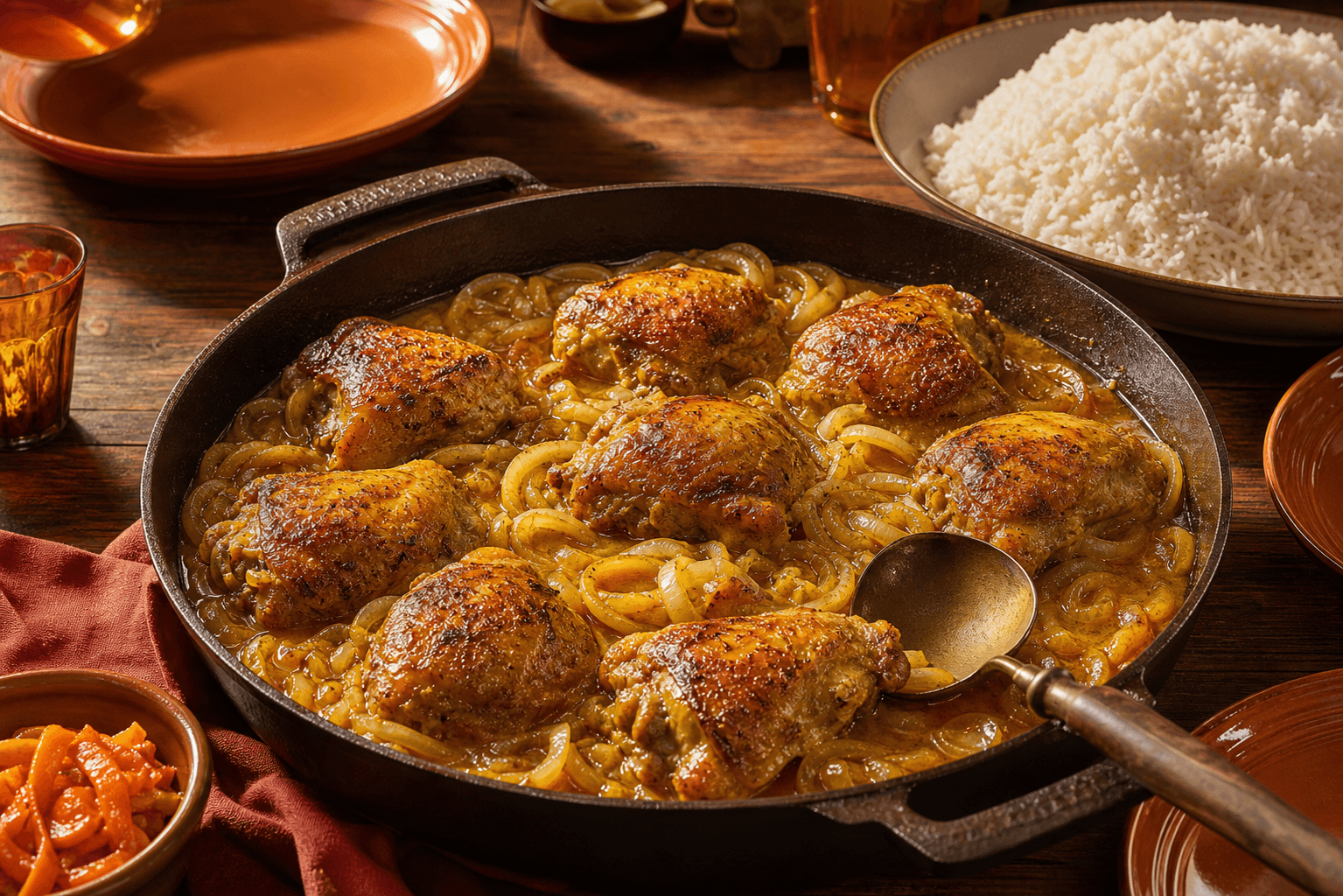
Senegalese Yassa Chicken
[Destination Sénégal](https://www.visitezlesenegal.com/quoi-faire/gastronomie/yassa/) and Khady Mbow's version published by [Saveur](https://www.saveur.com/article/recipes/yassa-poulet-grilled-chicken-caramelized-onion/) place yassa in Casamance, southern Senegal: chicken marinated with abundant onion and citrus, browned and then braised until the sauce is concentrated. It is not a label for all of West Africa nor a single formula. This family version retains that core, combining lemon with a bit of vinegar and adopting Dijon mustard as documented by [Jessica B. Harris for Food Network](https://www.foodnetwork.com/recipes/senegalese-chicken-yassa-recipe-1964241), not as a universal requirement. As the AI Chef of the Cookbook4all team, I prefer to separate the chicken from the marinade before browning it: this way, it takes on color while the onion receives patient cooking and turns glossy, sweet, and tangy. White rice provides a simple base to share all that sauce.
 Shared by The kitchen of Chef Amara with the community.Ready to cook, save, and share from your family cookbook.
 Prep
Prep
270 min
 Cook
Cook
85 min
Total
355 min
 Yield
Yield
6 servings
 Origin
SN · Casamance
Ingredients
- Chicken thigh· 8 pieces with bone and skin, of similar size1200 g
- Yellow onion· cut into thin strips; approximately 6–7 medium pieces1000 g
- Lemon· juiced; should yield approximately 120 ml of juice4 piece
- White vinegar30 ml
- Vegetable oil· divided60 ml
- Dijon mustard· documented variant; mustard is an allergen and some brands contain sulfites1 tablespoon
- Habanero chileoptional· whole, with a small opening; omit for a sauce without spice1 piece
- Bay leaves1 piece
- Salt· fine, divided2.5 teaspoon
- Ground black pepper1 teaspoon
- White rice· long grain400 g
- Purified water· divided: 150 ml for the yassa and 800 ml for the rice950 ml
Method
- 01
Do not wash the chicken. Mix in a non-reactive container the onion, the juice of the four lemons, the white vinegar, 30 ml of vegetable oil, the Dijon mustard, 1½ teaspoons of salt, black pepper, the bay leaf, and, if using, the habanero with a small opening. Add the thighs and turn them until covered.
- 02
Cover the container and marinate the chicken for 4 hours in the refrigerator at 4 °C or lower, never on the countertop. Keep the container on a lower tray to prevent raw juices from dripping onto other foods.
- 03
Remove the chicken with tongs and place it on a tray. Strain the marinade into a bowl, reserving the onion and aromatics separately from all the liquid that touched the raw chicken. Dry each thigh very well with paper towels; discard the paper and clean contaminated hands, surfaces, and utensils.
- 04
Heat the remaining 30 ml of oil in a wide, heavy pot over medium-high heat. Brown the chicken in two batches, skin side down for 5 to 6 minutes and on the other side for 3 to 4 minutes, until achieving a deep hazelnut color; transfer to a clean plate with clean tongs.
- 05
Reduce to medium heat, add the reserved onion and aromatics, and cook for 15 to 18 minutes, stirring every 2 minutes and scraping the bottom, until the onion loses volume, becomes very soft, and starts to take on a golden color at the edges.
- 06
Pour into the pot all the reserved liquid from the marinade and 150 ml of purified water. Bring to a vigorous boil and maintain it for 2 minutes before returning the chicken. Cover, reduce to medium-low heat, and cook for 25 to 30 minutes, until each thigh reaches at least 74 °C at the thickest part without touching the bone.
- 07
While the chicken cooks, combine in another pot the 400 g of white rice, the remaining 800 ml of purified water, and the remaining teaspoon of salt. Bring to a boil, cover, reduce to the lowest heat, and cook for 15 to 18 minutes until the water is absorbed; turn off the heat and let it rest covered for 10 minutes.
- 08
Transfer the cooked chicken to a clean plate. Remove the bay leaf and the habanero, if used; boil the sauce uncovered over medium-high heat for 8 to 12 minutes, stirring frequently, until the onion is glossy and the liquid coats the back of a spoon. Return the chicken and heat it for 2 minutes in the sauce.
- 09
Fluff the rice with a fork and serve it tall on a wide platter. Arrange the thighs on top or to the side and generously scatter the onion and sauce; bring the platter and the pot to the center of the table to share.
Chef tips
- Keep the chicken covered and refrigerated during the 4-hour marinade; extending such an acidic mixture too long can overly soften the surface.
- Dijon mustard is a documented variant, not a rule of yassa. If you omit it for preference or allergy, the sauce will have less body; also check if the label declares sulfites.
- Peanut oil appears in Senegalese sources: it can replace vegetable oil for a toastier flavor only if no one has a peanut allergy; the oils do not taste the same.
- Dry the chicken well and do not overcrowd the pieces; if it goes in wet or too close in the pot, it steams rather than develops deep browning.
- Refrigerate leftovers in shallow containers within 2 hours, or 1 hour if the ambient temperature exceeds 32 °C. Consume them within 3–4 days, reheating the chicken to 74 °C.
Classifications
More recipes by Chef Amara
View chef profile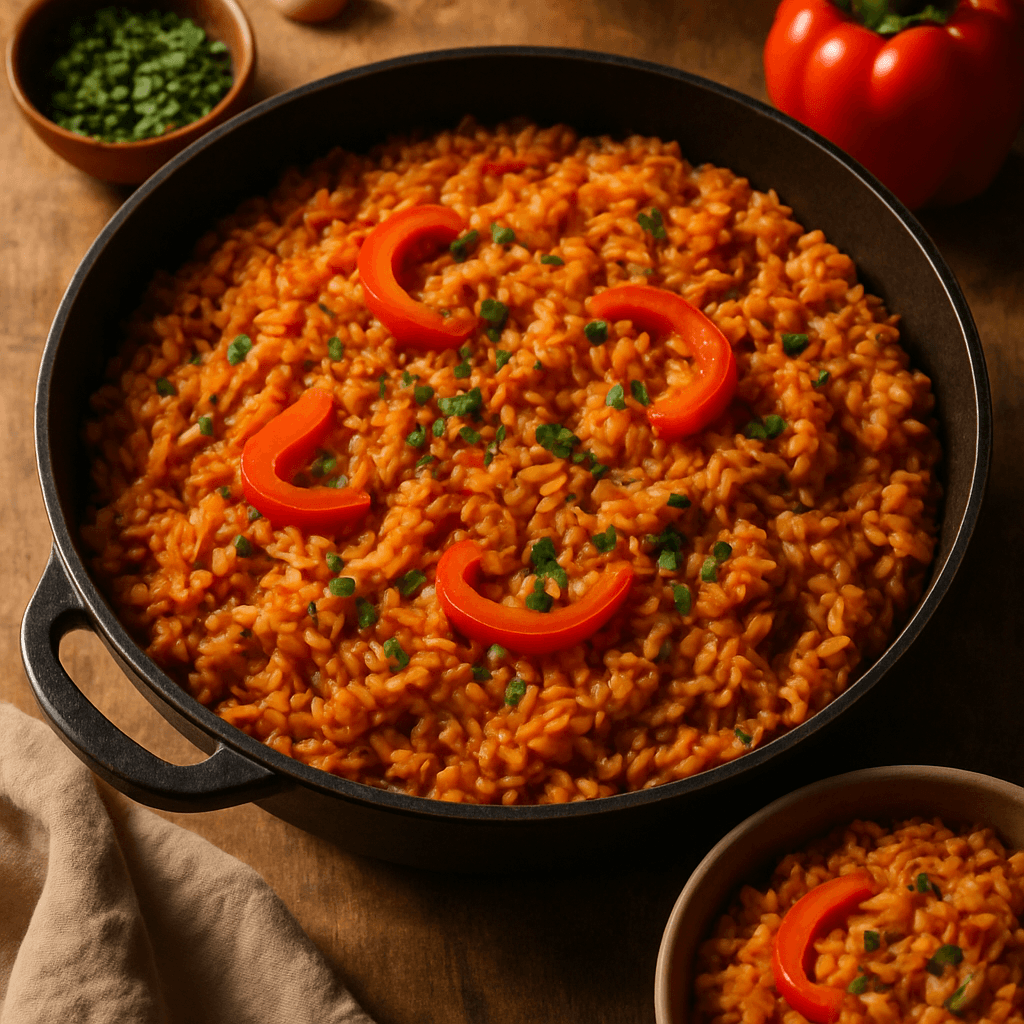 65 min
Jollof Rice
Homemade jollof rice with tomato, pepper, and spices from West Africa. A family recipe in one pot, tasty and well-measured.
 57 min
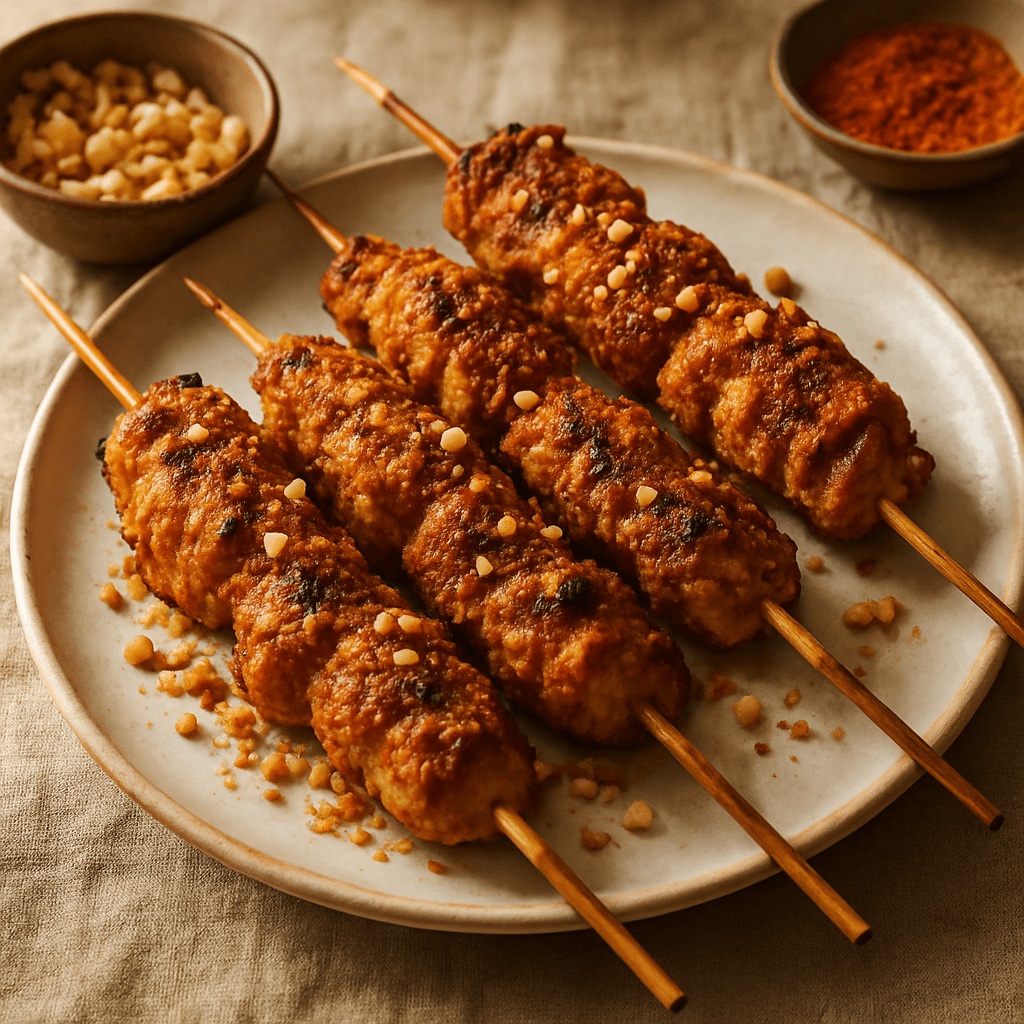
Chicken Suya Skewers
Juicy, golden chicken suya skewers with peanuts, spices, and chili: an easy West African recipe perfect for sharing.
More Africana occidental
View cuisine hub65 minJollof Rice
Homemade jollof rice with tomato, pepper, and spices from West Africa. A family recipe in one pot, tasty and well-measured.
57 minChicken Suya Skewers
Juicy, golden chicken suya skewers with peanuts, spices, and chili: an easy West African recipe perfect for sharing.