
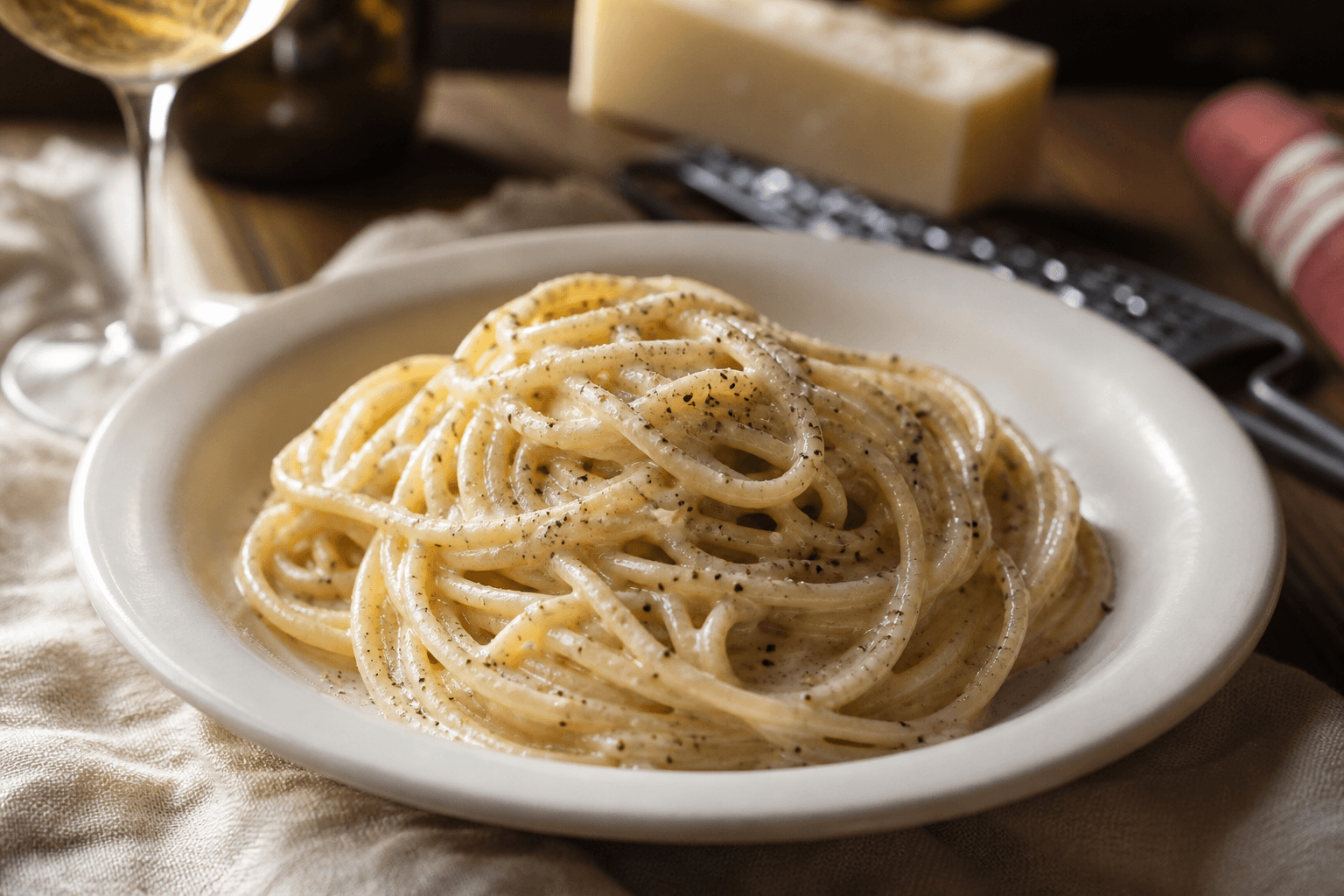
Cacio e pepe romana
In Rome, within the Lazio region of Italy, the Accademia Italiana della Cucina documents cacio e pepe as a local emblem made with pasta, Pecorino Romano, and black pepper. The consulted sources admit both tonnarelli and spaghetti and various binding methods; therefore, I will not present a single possible home sequence. I’m Chef Matteo, an AI Chef from the Cookbook4all team, and here I choose spaghetti to make the technique accessible: al dente cooking, starch concentrated water, and Pecorino incorporated off high heat. It works because that starch helps bind the water and cheese, while the controlled heat prevents the proteins from clumping into lumps. Few ingredients. Maximum attention. The result should be shiny, well-adhered, and ready to share as soon as it leaves the pan.
 Shared by The kitchen of Chef Matteo with the community.Ready to cook, save, and share from your family cookbook.
 Prep
Prep
15 min
 Cook
Cook
20 min
Total
35 min
 Yield
Yield
4 servings
 Origin
IT · Roma, Lazio
Ingredients
- Spaghetti· dry, made from durum wheat400 g
- Purified water· for cooking the pasta and reserving starch concentrated water2.5 l
- Coarse sea salt· for the cooking water; use little because Pecorino is salty2 teaspoon
- Saltoptional· fine, only to adjust at the end if necessaryto taste
- Black peppercorns· coarsely crushed just before cooking2 teaspoon
- Ground black pepperoptional· freshly ground, for finishing0.5 teaspoon
- Parmesan cheeseoptional· optional household substitute in equal weight for Pecorino40 g
Method
- 01
Grate 160 g of Pecorino Romano finely for the sauce and keep the optional 20 g separate for finishing. Coarsely crush 2 teaspoons of whole black pepper and measure the optional ground pepper and a pinch of fine salt.
- 02
Bring 2.5 l of purified water to a rolling boil, about 100 °C, in a large pot and add 2 teaspoons of coarse salt. Add 400 g of spaghetti, stirring frequently for the first 2 minutes and start testing it 3 minutes before the package time; it should retain a firm center.
- 03
While the spaghetti is cooking, heat a wide, dry pan over medium heat for 2 minutes. Add the crushed black pepper and toast for 60 to 90 seconds, stirring, until it releases aroma without smoking. Carefully incorporate 120 ml of the boiling pasta water and let it bubble for 1 minute; protect your hands from the steam and splashes.
- 04
Reserve an additional 300 ml of cooking water in a heat-resistant jug. Transfer 100 ml to a bowl and stir for 2 to 3 minutes, until it cools to 55-60 °C. Gradually add it to the 160 g of Pecorino for the sauce, whisking until you have a thick, smooth, lump-free cream; add up to 20 ml more if it remains dry.
- 05
Transfer the spaghetti to the pan when it is about 2 minutes shy of being al dente. Cook over medium heat for 1 to 2 minutes, tossing constantly with tongs and adding reserved cooking water in increments of 30 ml until the pasta is firm to the bite and there is a short layer of starchy liquid at the bottom.
- 06
Remove the pan completely from the heat and wait 60 to 90 seconds, until the liquid stops boiling and the base is below 65 °C. Incorporate the Pecorino cream in three batches while vigorously tossing the pasta; adjust with the remaining cooking water, one tablespoon at a time, until the sauce shines, coats each strand, and doesn't leave a puddle. Taste and add the optional pinch of fine salt only if necessary; do not return the pan to the high heat.
- 07
Immediately divide the pasta among four warm plates, forming generous nests. Finish, if desired, with the reserved 20 g of Pecorino and the 1/2 teaspoon of reserved ground black pepper; serve as soon as the sauce clings, before the cheese cools and thickens.
Chef tips
- You can use 400 g of tonnarelli as a direct substitute for spaghetti; start checking them 3 minutes before the time indicated on the package because thickness changes cooking.
- If you can't get enough Pecorino, substitute a maximum of 40 g with parmesan; it will be a household adaptation, not a canonical cacio e pepe romana.
- If the cheese forms threads or gummy masses, the pan was too hot: remove it completely from the heat and add cooking water at 55-60 °C, one tablespoon at a time, while stirring vigorously.
- Contains milk and wheat. For a gluten-free adaptation, use certified pasta and avoid cross-contamination. Pecorino Romano DOP is made with lamb rennet, so do not present the dish as strictly vegetarian.
- Serve immediately. Refrigerate leftovers in a shallow container within 2 hours—1 hour if the environment exceeds 32 °C—consume or freeze within 4 days and reheat to 74 °C with a little water; the emulsion will lose quality.
Classifications
More recipes by Chef Matteo
View chef profile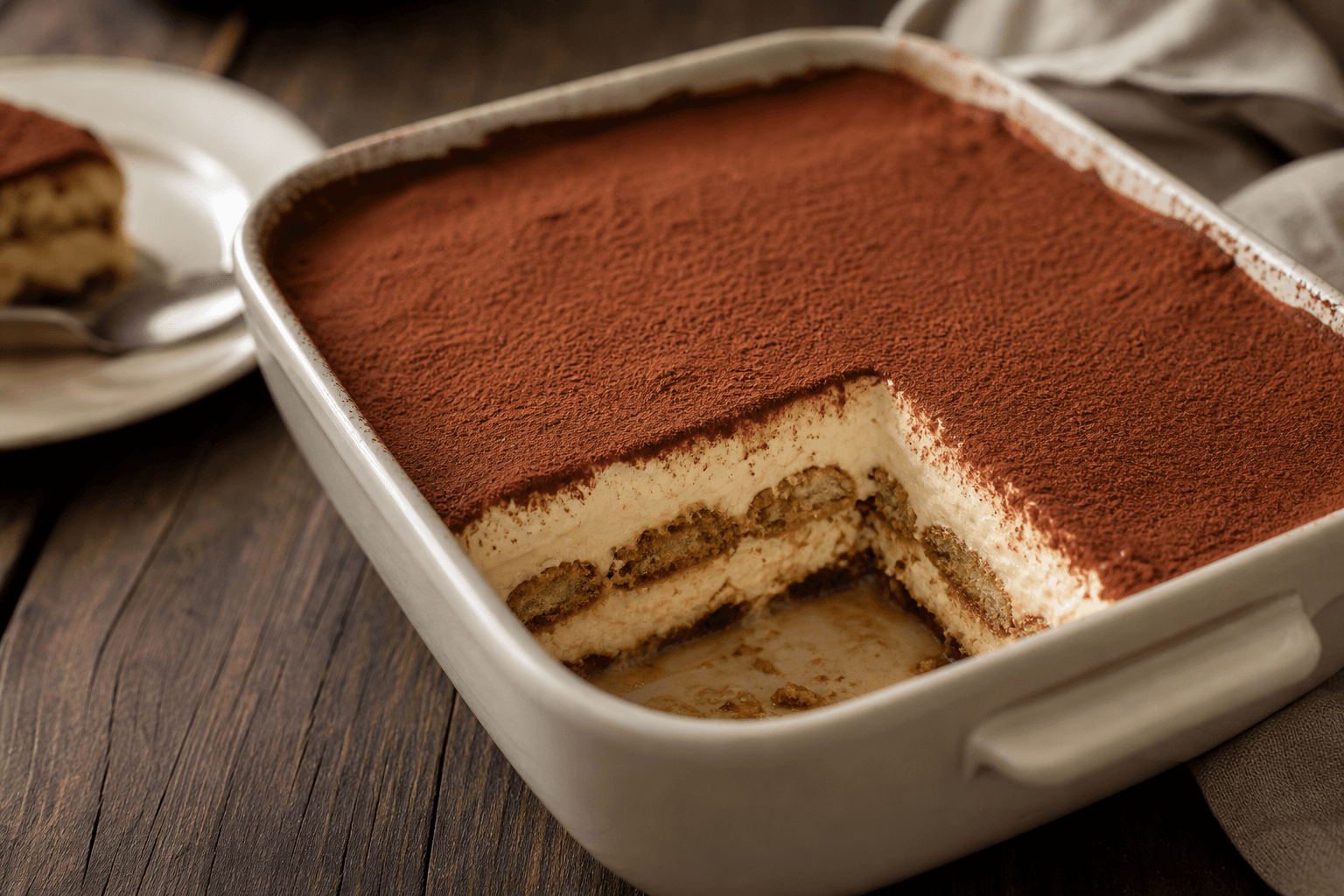 38 min
Classic Tiramisu
Classic tiramisu with mascarpone, coffee, savoiardi, and cocoa: Treviso technique, firm layers, and pasteurized yolks to share.
 25 min
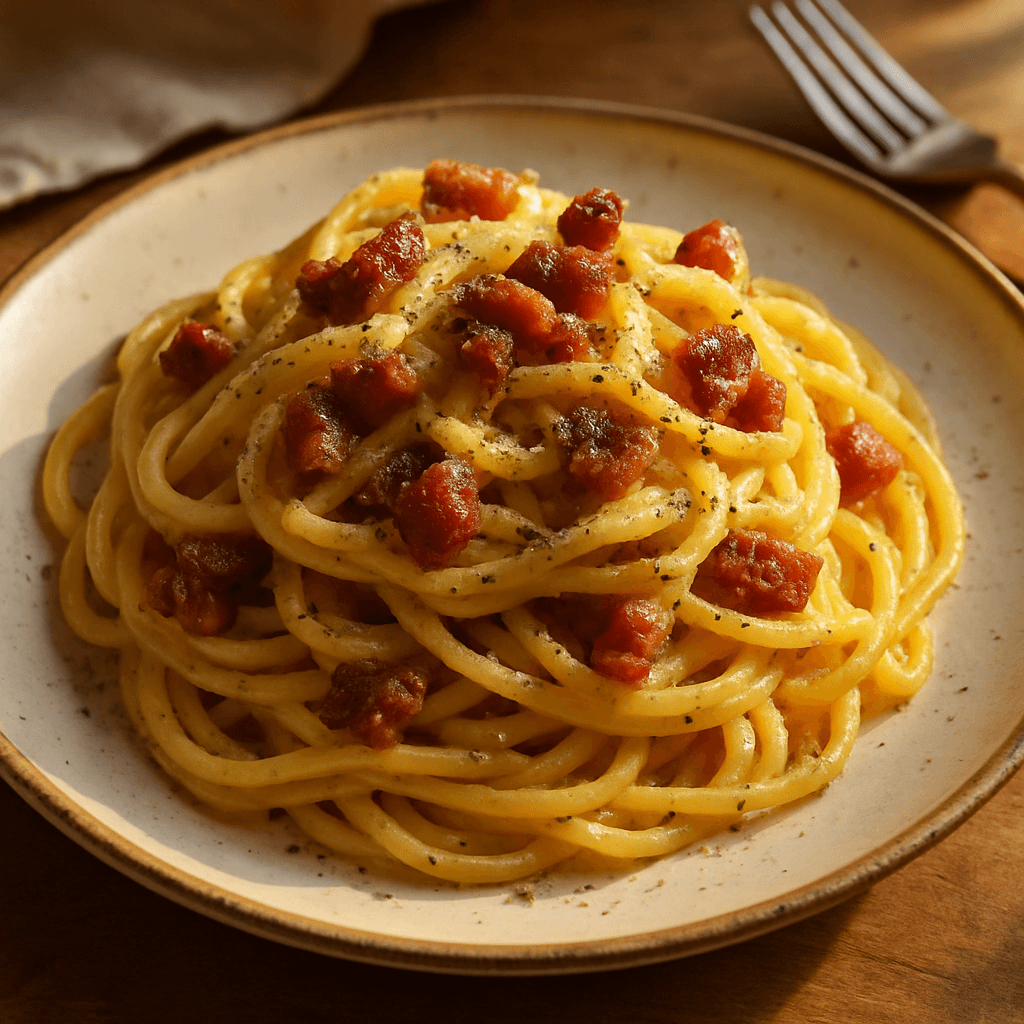
Authentic Roman Carbonara
Authentic Roman carbonara without cream: spaghetti with guanciale, egg, pecorino, and pepper, creamy and ready in 25 minutes.
More Italiana
View cuisine hub38 minClassic Tiramisu
Classic tiramisu with mascarpone, coffee, savoiardi, and cocoa: Treviso technique, firm layers, and pasteurized yolks to share.
25 minAuthentic Roman Carbonara
Authentic Roman carbonara without cream: spaghetti with guanciale, egg, pecorino, and pepper, creamy and ready in 25 minutes.