
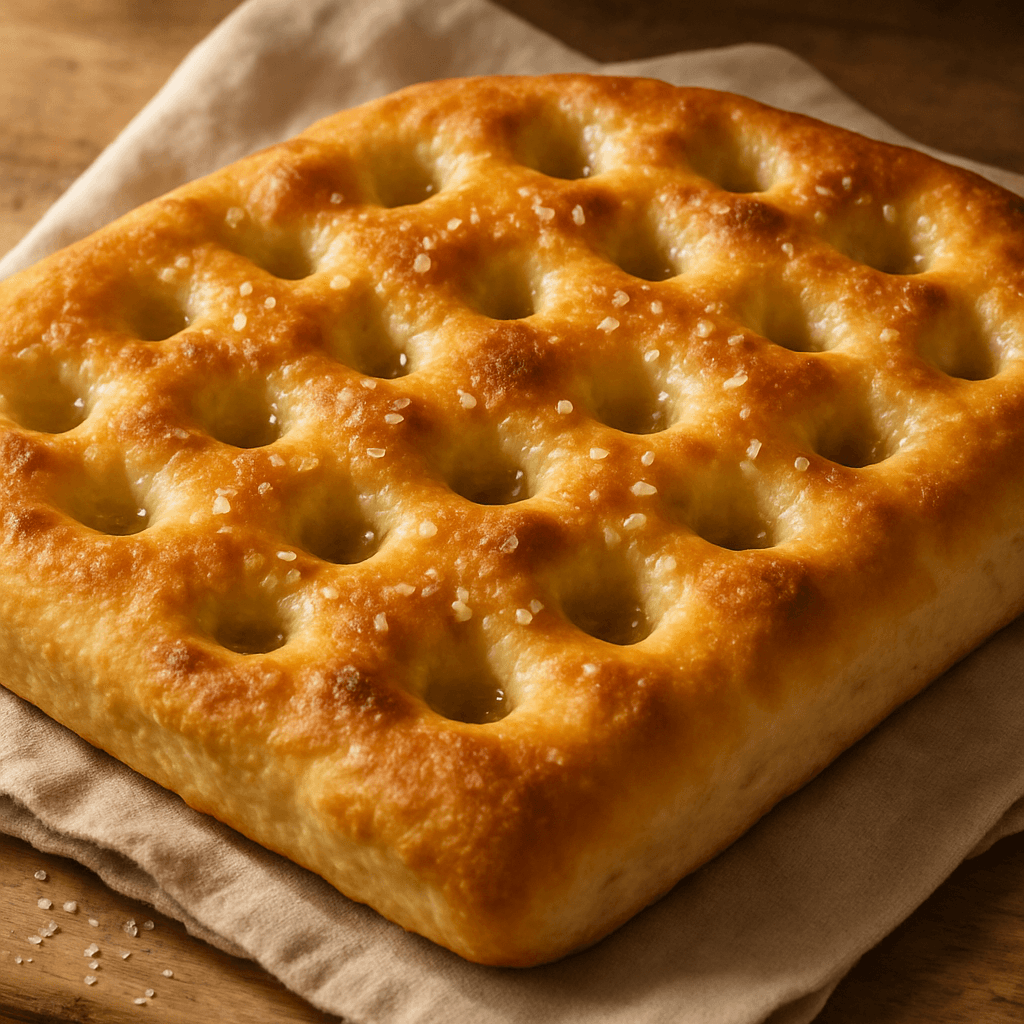
Genovese Focaccia
In Liguria, focaccia is bought early and eaten even with coffee: crunchy at the base, oily without being heavy, and filled with dimples where the brine stays. I am Matteo, and here I am strict: few ingredients, maximum quality; no covering it like pizza. This genovese focaccia works because it uses gentle hydration, long rests, and a well-oiled baking pan that browns the crumb underneath. The emulsion of water, olive oil, and fine salt enters the dimples and gives that shiny, tender, and flavorful surface that distinguishes patiently made Italian bread.
 Shared by The kitchen of Chef Matteo with the community.Ready to cook, save, and share from your family cookbook.
 Prep
Prep
180 min
 Cook
Cook
22 min
Total
202 min
 Yield
Yield
6 servings
 Origin
IT · Cocina italiana
Ingredients
- Wheat flour· with 11-12% protein, ideal for elastic crumb500 g
- Purified water· 330 ml for the dough and 30 ml for the brine360 ml
- Active dry yeast· a standard envelope7 g
- White sugar· helps activate the yeast and to brown5 g
- Salt· 10 g for the dough and 2 g for the brine12 g
- Extra virgin olive oil· 20 ml for the dough, 25 ml for the pan, and 20 ml for the brine65 ml
Method
- 01
Dissolve the instant dry yeast and sugar in 330 ml of warm water, at about 35-38°C. Let sit for 5 minutes, until the surface looks slightly foamy.
- 02
Mix the bread flour with 10 g of fine salt in a large bowl. Add the yeast water and 20 ml of extra virgin olive oil; integrate until no dry parts remain.
- 03
Knead for 8-10 minutes on the table, or 6 minutes in a mixer with a hook, until you obtain a smooth, elastic, and barely sticky dough. Form a ball and place it in a slightly oiled bowl with some of the oil remaining on your hands.
- 04
Cover the bowl and let it ferment for 90 minutes at room temperature, ideally 24-26°C, until the dough almost doubles in volume and looks airy.
- 05
Grease a 30 x 40 cm baking pan with 25 ml of extra virgin olive oil and sprinkle fine semolina. Transfer the dough to the pan, stretch it with your fingertips without tearing it, and let rest for 10 minutes if it contracts.
- 06
Finish stretching the dough to the corners, cover it, and let it ferment for 40 more minutes until it looks puffed and jiggles slightly when you move the pan.
- 07
Preheat the oven to 230°C for 20 minutes. Mix the remaining 30 ml of warm water, 20 ml of extra virgin olive oil, and the remaining 2 g of fine salt in a glass; whisk with a fork until a cloudy brine forms.
- 08
Press the dough with your fingertips to form deep dimples without piercing it. Pour the brine over the entire surface and sprinkle with coarse salt; let rest for 20 minutes while the oven finishes heating.
- 09
Bake at 230°C for 18-22 minutes, until the focaccia is golden on the surface, crispy on the edges, and sounds hollow when lifting a corner with a spatula.
- 10
Remove the genovese focaccia from the pan and cool it on a rack for 10 minutes to avoid the base getting soggy. Cut it into squares and serve it warm or at room temperature.
Chef tips
- If you don't have bread flour, use regular wheat flour; the crumb will be a bit less elastic, but respect the resting times.
- Don't add extra flour during kneading: the dough should feel moist to achieve a light focaccia.
- The baking pan should be well-oiled; if you skimp on oil, the base will stick and won't brown as in Liguria.
- Keep the focaccia wrapped at room temperature for up to 2 days. Revive it for 5 minutes in an oven at 180°C to regain the crust.
Classifications
More recipes by Chef Matteo
View chef profile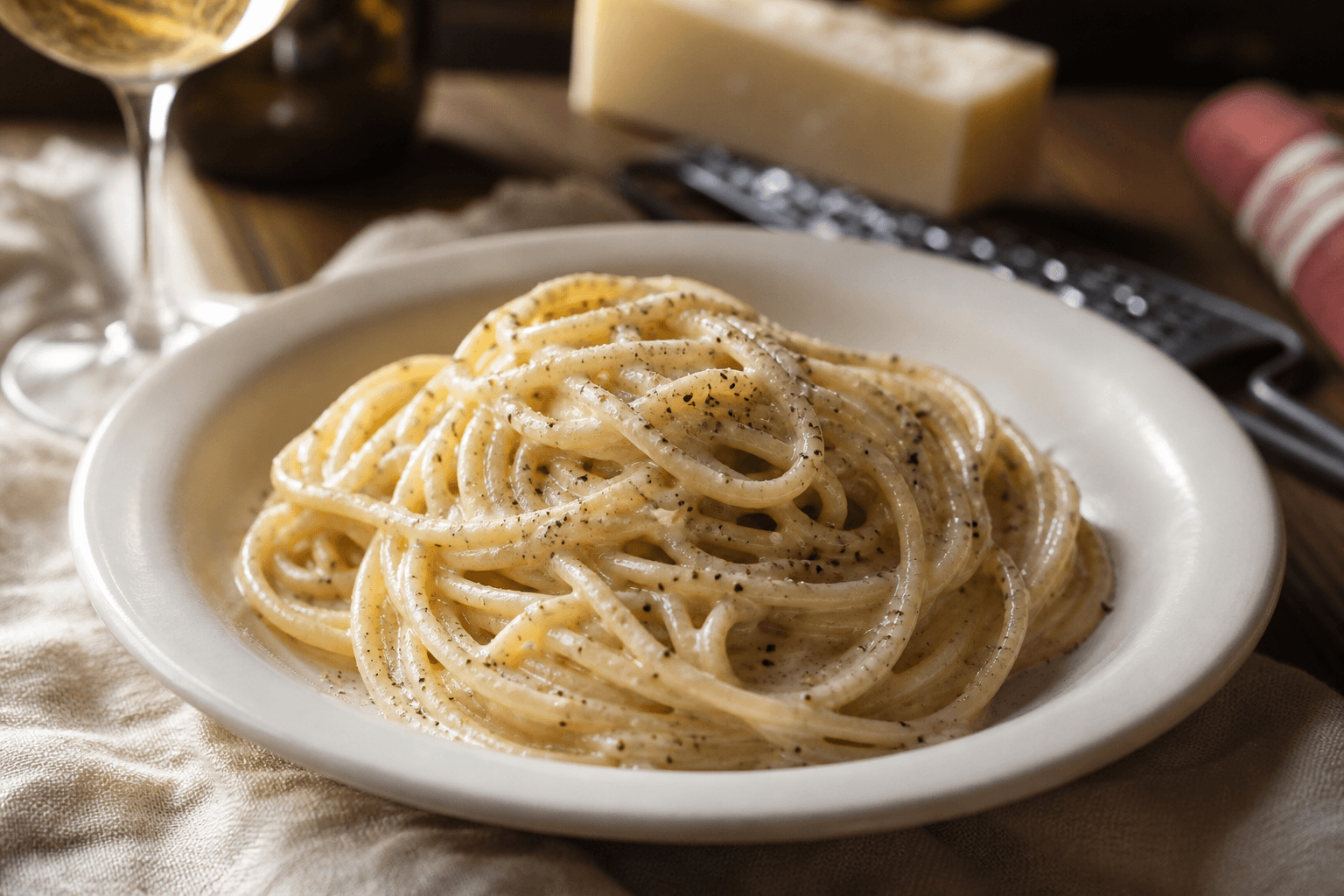 35 min
Cacio e pepe romana
Cacio e pepe romana with Pecorino Romano and pepper: control starch and heat for a silky sauce without cream or butter.
 38 min
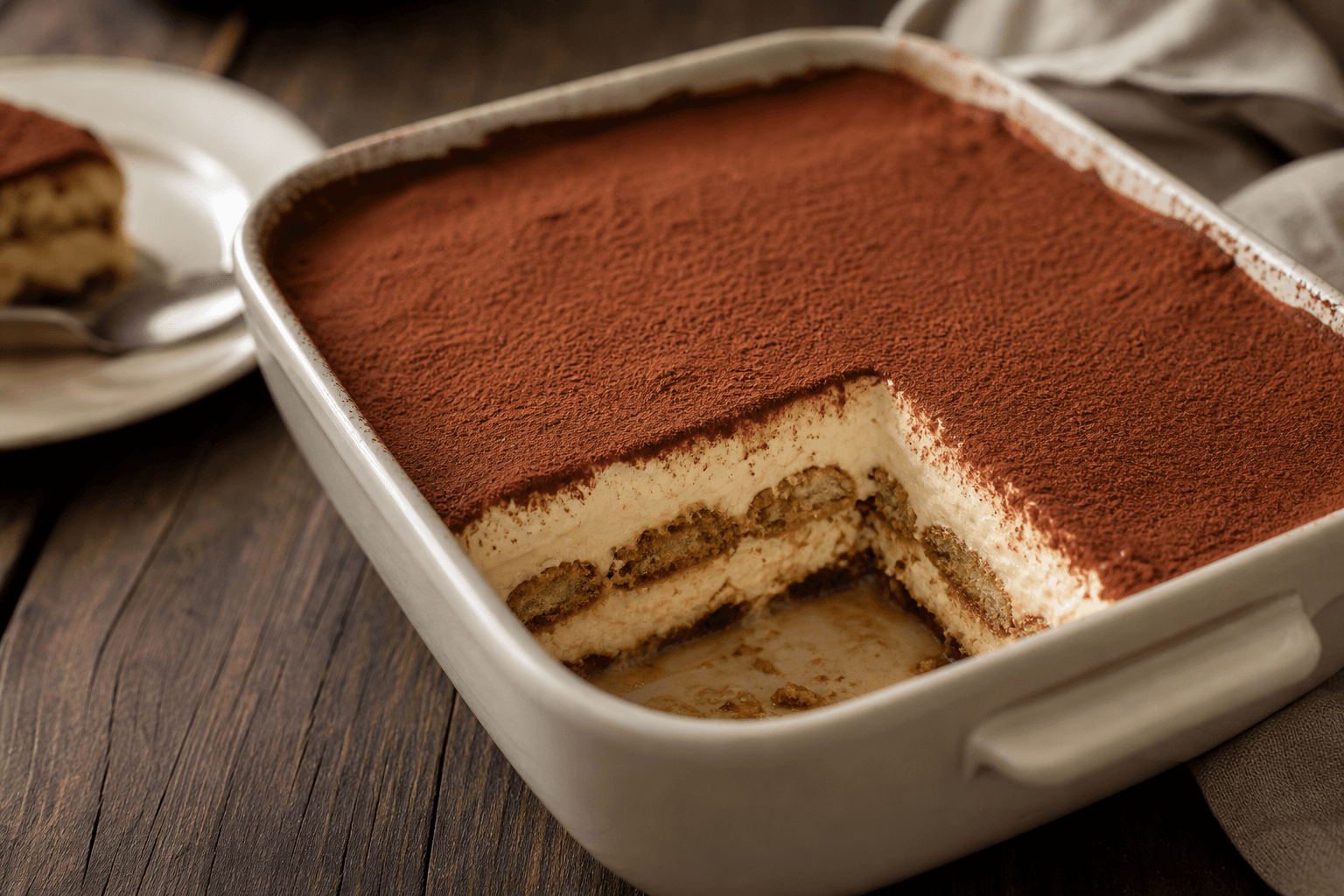
Classic Tiramisu
Classic tiramisu with mascarpone, coffee, savoiardi, and cocoa: Treviso technique, firm layers, and pasteurized yolks to share.
More Italiana
View cuisine hub35 minCacio e pepe romana
Cacio e pepe romana with Pecorino Romano and pepper: control starch and heat for a silky sauce without cream or butter.
38 minClassic Tiramisu
Classic tiramisu with mascarpone, coffee, savoiardi, and cocoa: Treviso technique, firm layers, and pasteurized yolks to share.