
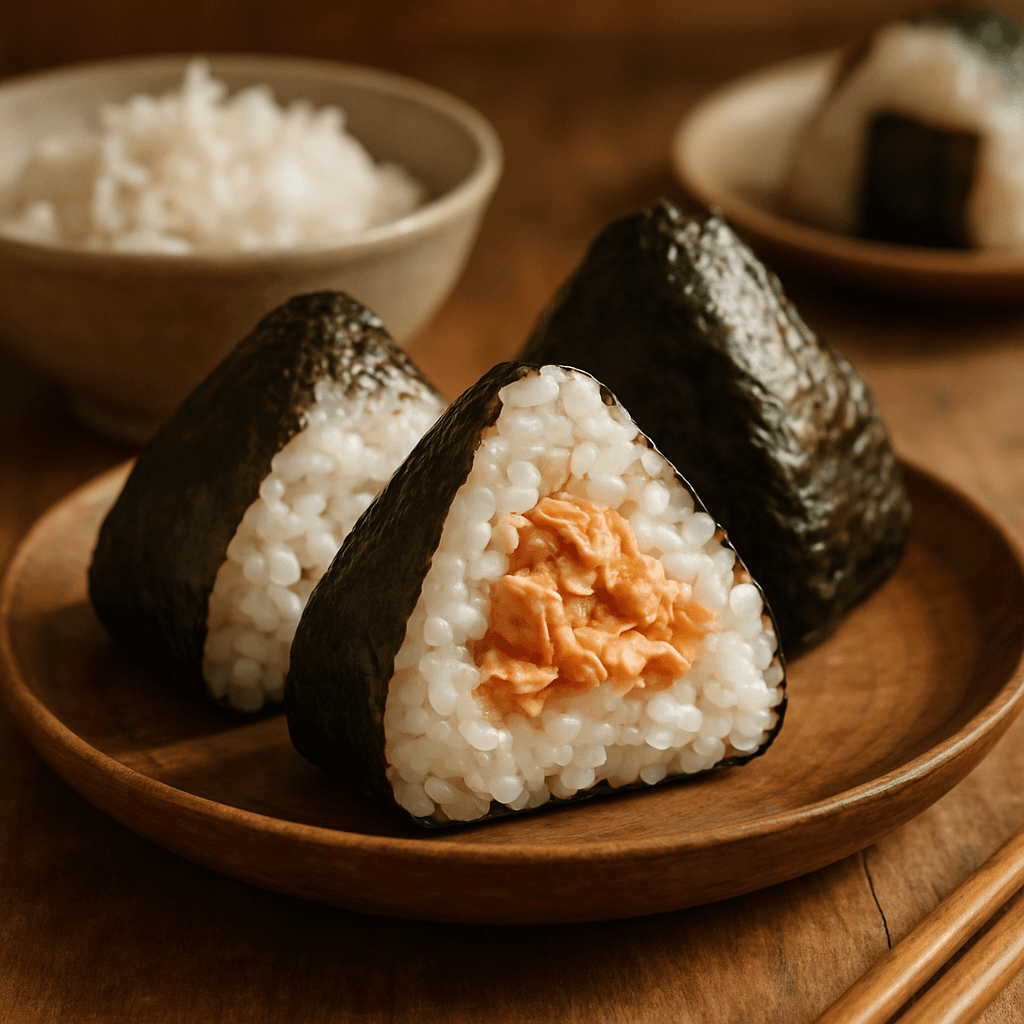
Salmon Onigiri
In Japan, onigiri is road food, lunchbox fare, and homey comfort: warm rice molded by hand to carry something simple and comforting. I’m Yuki, and in this version, I take care with two details that make all the difference: well-washed rice to keep it clean and sticky without becoming mush, and baked salmon with soy sauce and sesame for a juicy, tasty, and easy-to-flake filling. The water ratio gives a soft grain that compacts well; the final resting allows the steam to finish settling the starch.
 Shared by The kitchen of Chef Yuki with the community.Ready to cook, save, and share from your family cookbook.
 Prep
Prep
25 min
 Cook
Cook
30 min
Total
55 min
 Yield
Yield
6 servings
 Origin
JP · Japón
Ingredients
- Purified water· for cooking the rice540 ml
- Salmon· without visible bones250 g
- Salt· divided1 teaspoon
- Soy sauce· preferably Japanese1 tablespoon
- Sesame oil· to flavor the salmon1 teaspoon
- Sesame seeds· white or mixed1 tablespoon
Method
- 01
Wash the Japanese rice in a bowl, changing the water 4 or 5 times, until the water is almost clear; drain for 10 minutes so the grain absorbs water evenly.
- 02
Place the drained rice with 540 ml of water in a heavy-bottomed pot; soak for 20 minutes, cover, and bring to a boil over medium-high heat for 4 minutes, as soaking helps prevent the center of the grain from being hard.
- 03
Reduce the heat to low and cook the rice covered for 14 minutes; turn off and let it rest for 10 minutes without uncovering, until shiny and no free water remains at the bottom.
- 04
Preheat the oven to 200 °C; brush the salmon with soy sauce, toasted sesame oil, and 1/4 tsp of salt, and bake for 12 to 14 minutes, until it flakes easily and reaches 63 °C in the center.
- 05
Flake the warm salmon with a fork, removing skin or bones, and mix with the toasted sesame seeds; the filling should be juicy, not dry.
- 06
Fluff the hot rice with cutting motions and sprinkle with 1/2 tsp of salt; gently mix until the steam decreases and you can touch it without burning yourself, as warm rice molds better.
- 07
Divide the rice into 6 portions; lightly moisten your hands, rub them with the remaining 1/4 tsp of salt, flatten each portion, place a generous tablespoon of salmon in the center, and close to form firm triangles without squishing too much.
- 08
Wrap each onigiri with half a sheet of nori just before serving, gently pressing to adhere and keep a crispy edge.
Chef tips
- If you don't have fresh salmon, use cooked salmon from the previous day; just shred it finely so that the onigiri closes well.
- Don’t mold the rice cold: it breaks and loses its stickiness. It should be warm, shiny, and slightly damp.
- Avoid overcooking the salmon; when it flakes and reaches 63 °C, it is ready and juicy.
- To store, wrap the onigiri without nori and refrigerate for up to 24 hours; place the nori when serving to avoid sogginess.
Classifications
More recipes by Chef Yuki
View chef profile 40 min
 40 min
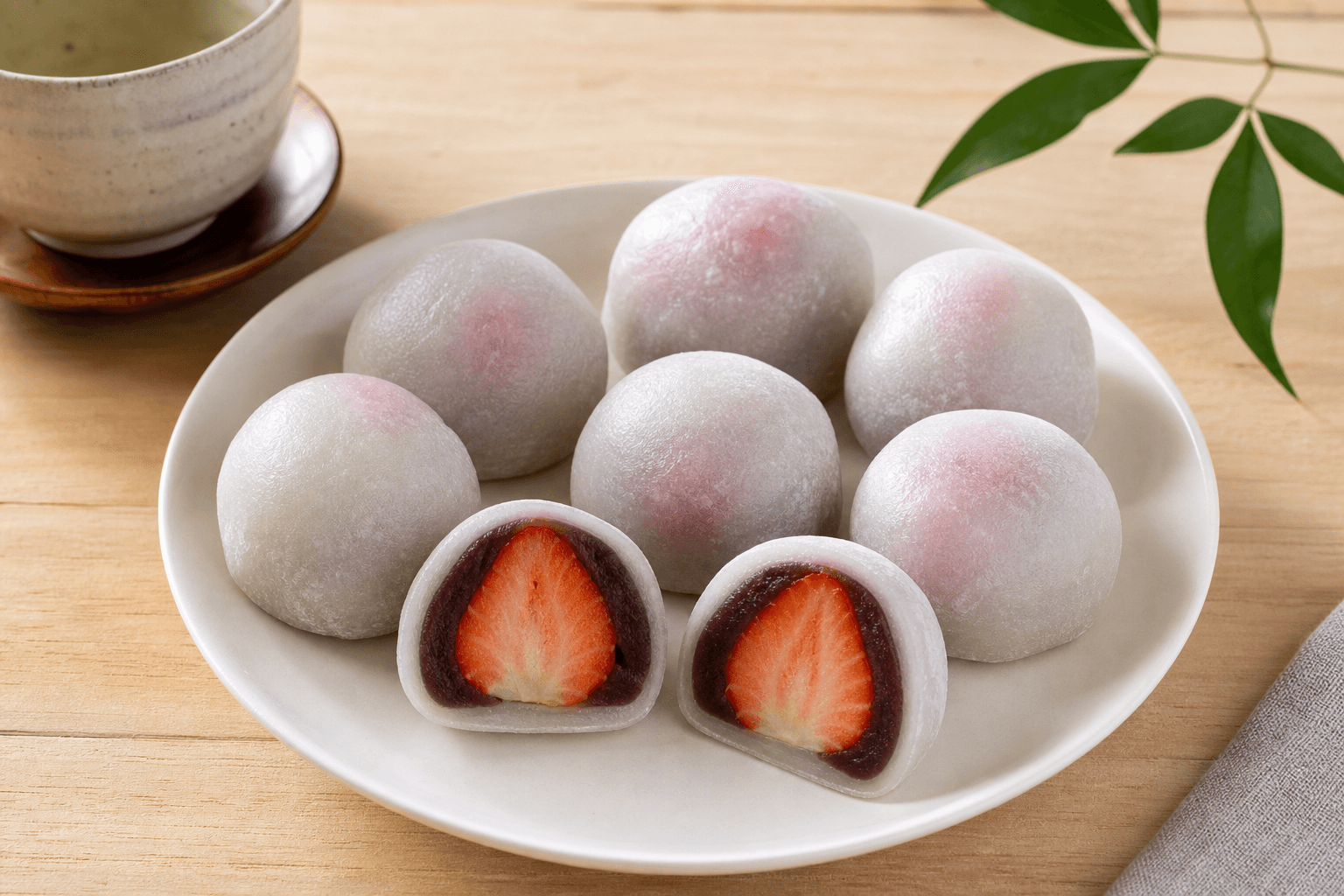
Strawberry Mochi
Make Japanese strawberry mochi with sweet anko and soft gyūhi: exact measurements, microwave cooking, and clear signals to form 8 pieces.
More Japonesa
View cuisine hub40 min40 minStrawberry Mochi
Make Japanese strawberry mochi with sweet anko and soft gyūhi: exact measurements, microwave cooking, and clear signals to form 8 pieces.