
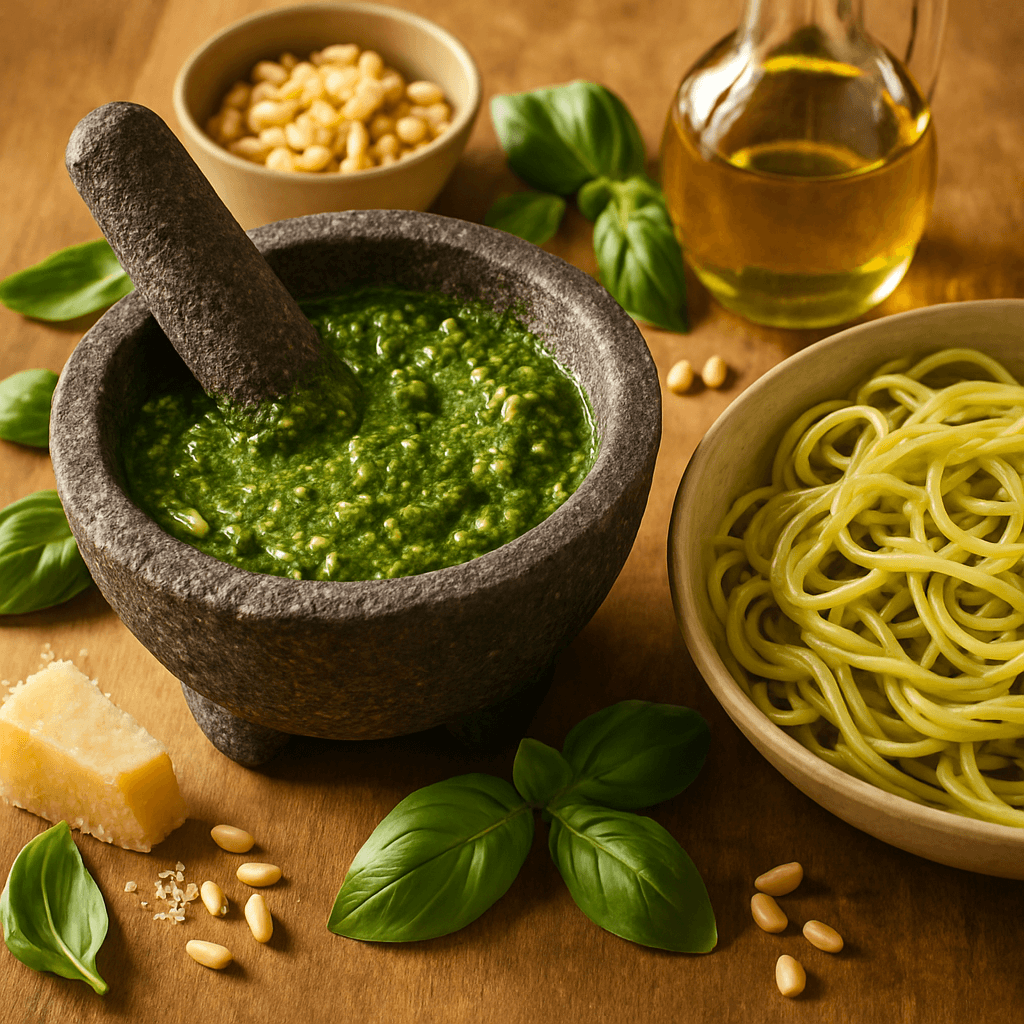
Traditional Genovese Pesto in Molcajete
In Genoa, Liguria, pesto is crafted with patience: first the garlic and salt, then the basil, pine nuts, cheeses, and finally the oil. I am Matteo, and I am strict with tradition: few ingredients, maximum quality, and no cream, period. This version uses a molcajete because in many home kitchens, it nobly replaces the mortar; it crushes without overheating and leaves a lively texture, not a uniform paste. The key is in dry leaves, gentle movements, and oil added gradually. Served with pasta, it results in a fragrant, glossy, and deeply familiar pesto sauce.
 Shared by The kitchen of Chef Matteo with the community.Ready to cook, save, and share from your family cookbook.
 Prep
Prep
20 min
 Cook
Cook
12 min
Total
32 min
 Yield
Yield
4 servings
 Origin
IT · Cocina italiana
Ingredients
- Basil· only leaves, clean and well dried60 g
- Garlic· without germ, if it is too strong1 clove
- Table salt· 3 g for the pesto and 15 g for cooking the pasta18 g
- Parmesan cheese· freshly grated45 g
- Extra virgin olive oil· mild and fruity, not bitter90 ml
- Purified water· for cooking the pasta3 l
Method
- 01
Wash the fresh basil carefully, drain it, and dry each leaf with paper towels; leave it for 5 minutes in the air until there are no visible drops.
- 02
Place the garlic and 3 g of sea salt in the molcajete; crush for 1 minute until you obtain a moist and aromatic paste.
- 03
Add the pine nuts and grind for 2 minutes with circular movements until they release oil and integrate with the garlic without becoming completely smooth.
- 04
Add the fresh basil in 3 batches; gently crush each batch for 1 to 2 minutes, just until the leaves break and the color looks bright green, not dark.
- 05
Incorporate the Parmigiano Reggiano cheese and the Pecorino Romano cheese; mix for 1 minute with the pestle until a thick and grainy paste forms.
- 06
Pour the extra virgin olive oil in a thin stream, gradually, and stir for 2 minutes until the pesto looks glossy, creamy from emulsification, and still with texture.
- 07
Boil 3 l of water at 100°C in a large pot, add the remaining 15 g of sea salt, and cook the trofie or fusilli pasta for 9 to 11 minutes, until al dente.
- 08
Reserve 120 ml of the cooking water, drain the pasta, and transfer it to a bowl off the heat; add the pesto and mix for 1 minute, adding cooking water gradually until the sauce adheres to the pasta.
- 09
Serve immediately, when the pasta is hot and the pesto retains a fresh aroma, vivid green color, and a light layer of glossy oil.
Chef tips
- If you can't find Pecorino Romano, use more Parmigiano Reggiano, but add a minimal extra pinch of sea salt to compensate.
- Do not blend for too long: the heat from the blender oxidizes the basil and turns the pesto dark and bitter.
- Do not heat the pesto in a pan; mix it off the heat with hot pasta and a bit of cooking water.
- Store the pesto without pasta in a jar, covered with a thin layer of extra virgin olive oil, for up to 3 days in the refrigerator.
Classifications
More recipes by Chef Matteo
View chef profile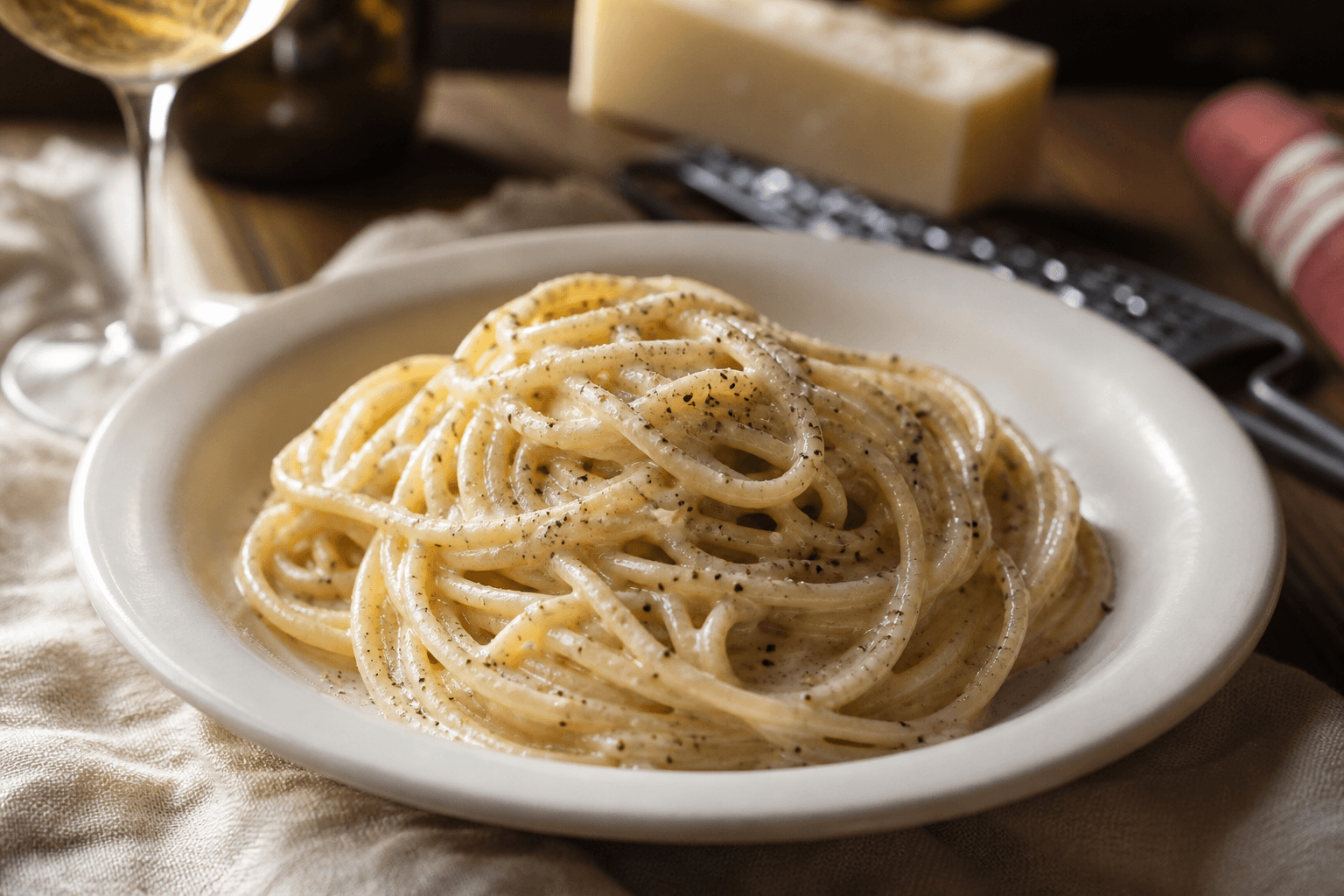 35 min
Cacio e pepe romana
Cacio e pepe romana with Pecorino Romano and pepper: control starch and heat for a silky sauce without cream or butter.
 38 min
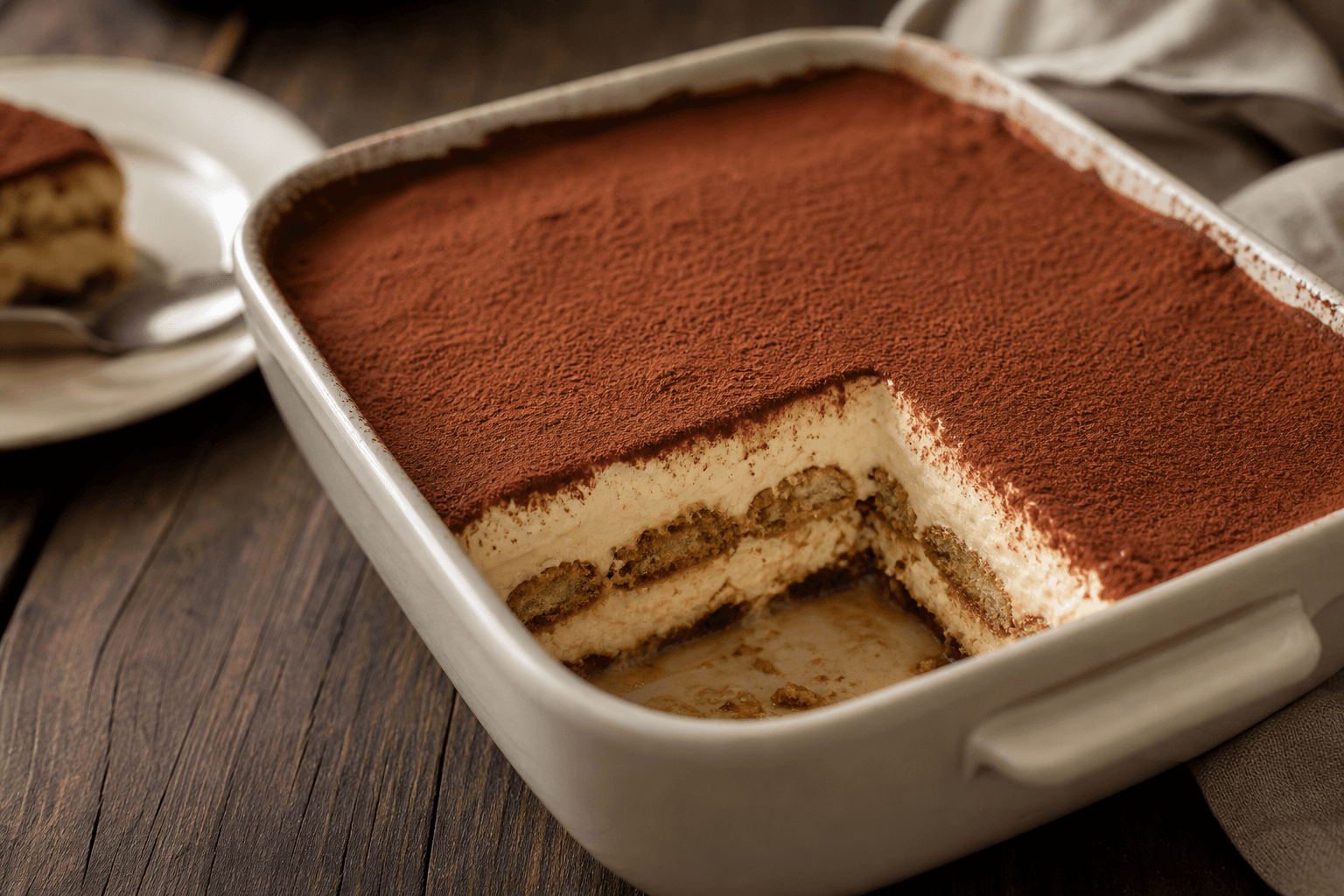
Classic Tiramisu
Classic tiramisu with mascarpone, coffee, savoiardi, and cocoa: Treviso technique, firm layers, and pasteurized yolks to share.
More Italiana
View cuisine hub35 minCacio e pepe romana
Cacio e pepe romana with Pecorino Romano and pepper: control starch and heat for a silky sauce without cream or butter.
38 minClassic Tiramisu
Classic tiramisu with mascarpone, coffee, savoiardi, and cocoa: Treviso technique, firm layers, and pasteurized yolks to share.