
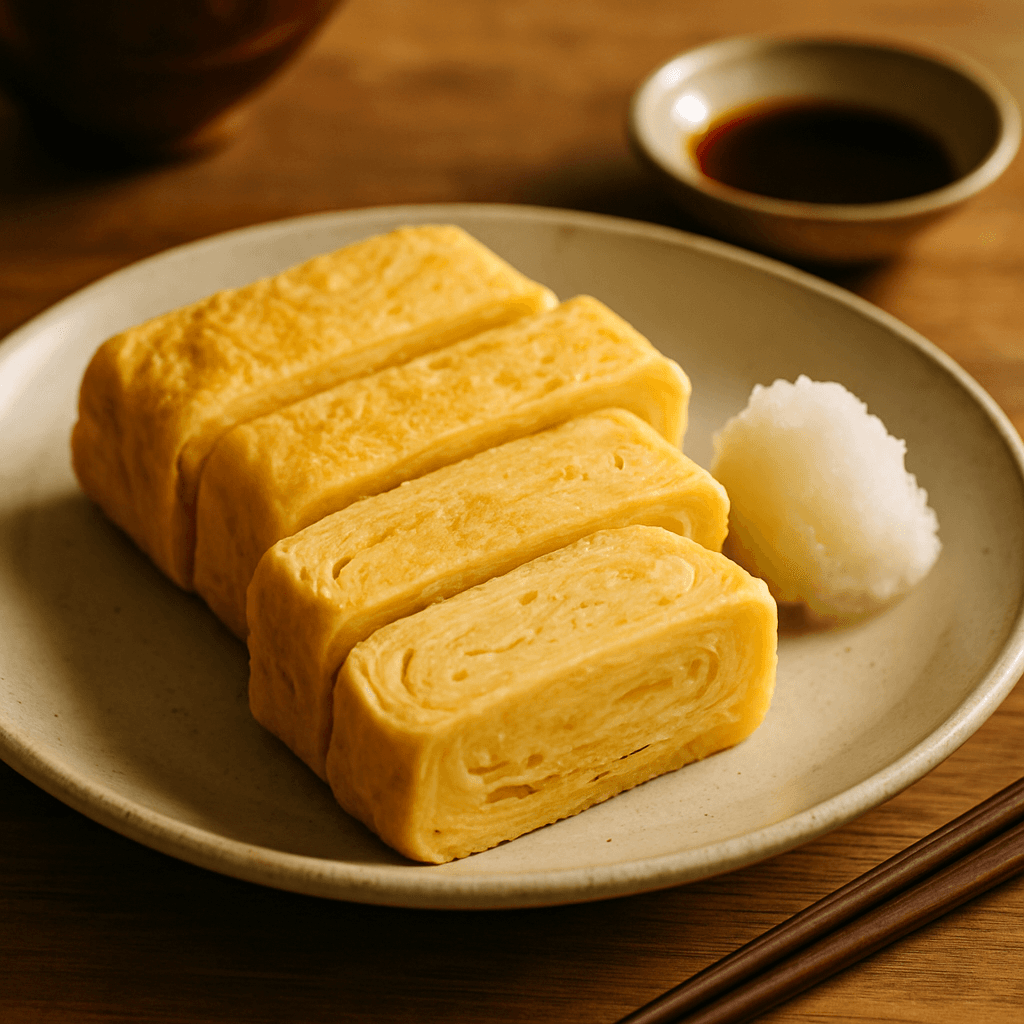
Tamagoyaki: Japanese Omelette
In Japanese home kitchens, tamagoyaki is often prepared at dawn, with the calm of someone packing the family lunchbox. My version keeps that spirit: slightly sweet eggs, dashi for depth, and thin layers that remain juicy without breaking. The key is to strain the mixture, cook over medium-low heat, and roll it before the egg dries out; this way, each turn captures steam and umami. You don't need a rectangular pan, although it helps: with patience, a small non-stick pan can also achieve a shiny, tender Japanese omelette ready to share in warm slices.
 Shared by The kitchen of Chef Yuki with the community.Ready to cook, save, and share from your family cookbook.
 Prep
Prep
12 min
 Cook
Cook
10 min
Total
22 min
 Yield
Yield
4 servings
 Origin
JP · Japón
Ingredients
- Egg· large, at room temperature4 piece
- Soy sauce· preferably Japanese1 tablespoon
- White sugar· white or refined2 teaspoon
- Salt· fineto taste
- Vegetable oil· for greasing the pan in very thin layers2 teaspoon
Method
- 01
Grate the daikon finely, gently squeeze to remove excess liquid, and set it aside in the fridge; its freshness balances the sweetness of the tamagoyaki when serving.
- 02
Break the eggs into a bowl and beat them with chopsticks or a fork without incorporating too much air; a calm mixture yields smoother, more even layers.
- 03
Add the dashi, soy sauce, mirin, sugar, and salt to the eggs, and mix until the sugar completely dissolves; this balance adds umami, shine, and even seasoning.
- 04
Strain the mixture through a fine sieve into a measuring cup; removing egg white strands prevents white spots and makes it easier to pour thin layers.
- 05
Heat a small non-stick pan or tamagoyaki pan over medium-low heat, around 160 °C, and brush it with a portion of the vegetable oil; it should feel hot without smoking.
- 06
Pour a thin layer of the egg mixture, tilt the pan to cover the bottom, and cook for 1 minute, until the surface is barely wet and the edges look firm; roll it from one end to the other carefully.
- 07
Push the roll to the starting end, brush again with vegetable oil, and pour more egg mixture, lifting the roll to let the mixture pass underneath; cook for 1 minute, until it sets without browning much, and roll again.
- 08
Repeat the brushing, pouring, and rolling for 5 to 6 minutes, until the egg mixture is finished and you have a firm, shiny, slightly elastic block; if it browns too quickly, lower the heat.
- 09
Gently press the tamagoyaki inside a mat or with a spatula for 2 minutes to define its shape, slice it into 8 pieces, and serve warm with the reserved grated daikon.
Chef tips
- If you don't have a rectangular pan, use a non-stick pan of 18 to 20 cm and roll patiently; the layers will be a bit wider but just as tender.
- Do not beat the eggs until frothy: too much air creates holes and breaks the roll when cutting.
- Keep the heat medium-low, around 160 °C; if the surface browns before setting, the tamagoyaki will lose juiciness.
- To store it, cool completely, keep in an airtight container, and refrigerate for up to 2 days; heat for 20 to 30 seconds or serve at room temperature.
Classifications
More recipes by Chef Yuki
View chef profile 40 min
 40 min
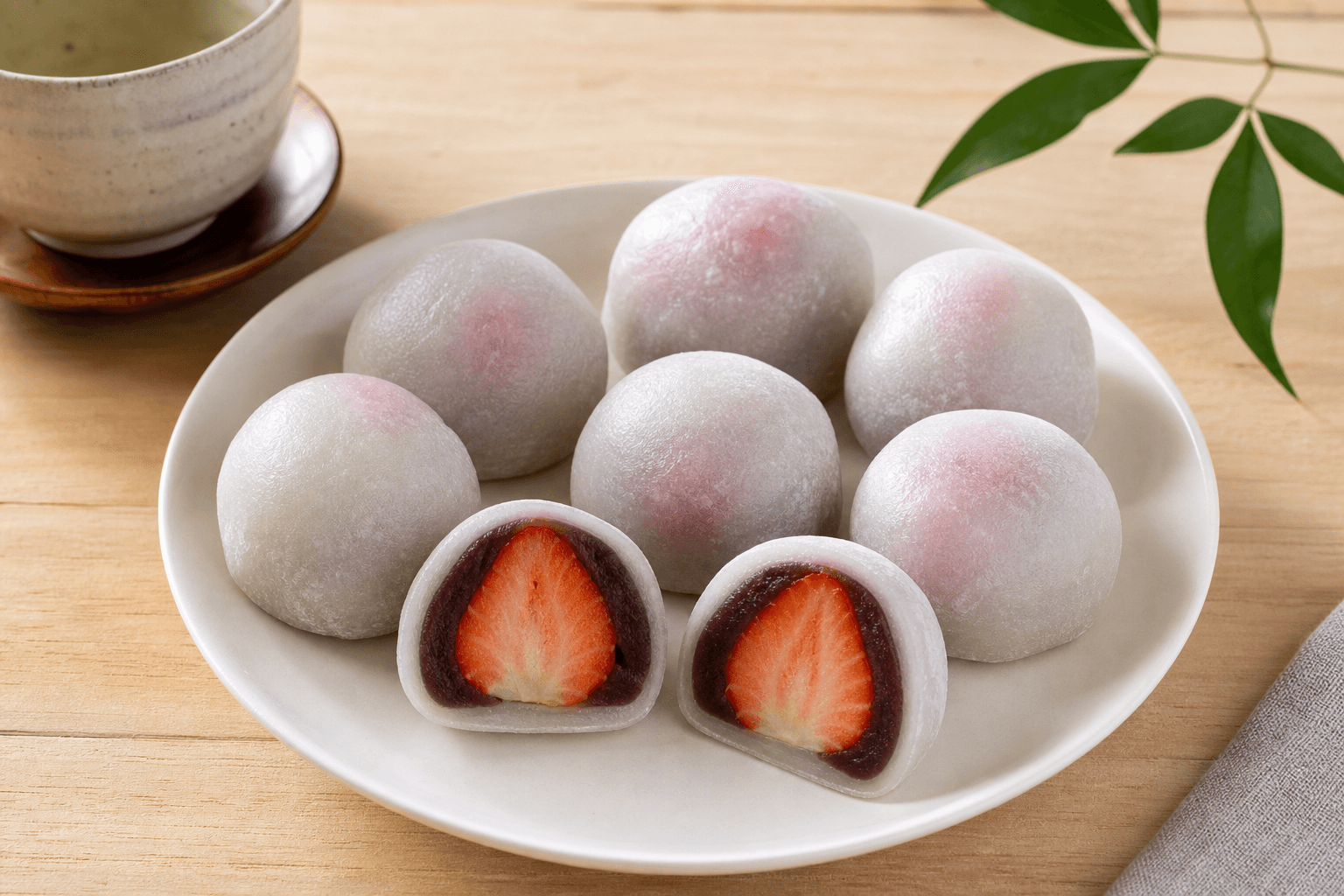
Strawberry Mochi
Make Japanese strawberry mochi with sweet anko and soft gyūhi: exact measurements, microwave cooking, and clear signals to form 8 pieces.
More Japonesa
View cuisine hub40 min40 minStrawberry Mochi
Make Japanese strawberry mochi with sweet anko and soft gyūhi: exact measurements, microwave cooking, and clear signals to form 8 pieces.